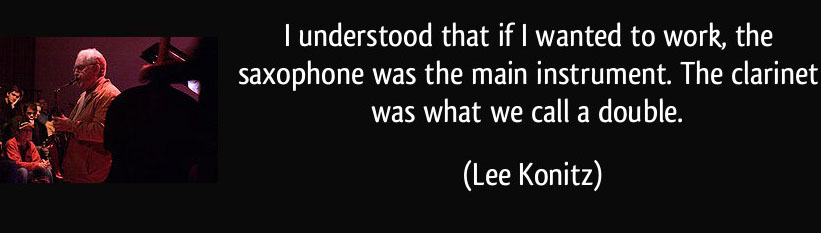
As I am preparing articles and doing research for future posts, I would like to present quotes by some of the greatest saxophone players and other musicians on why they play or like the saxophone, and what the saxophone means to them. See you soon!
Reviews and discussions about saxophones new and vintage, saxophone players and recordings.
Thursday, July 23, 2015
Friday, June 19, 2015
The Golden Age Of Saxophone Manufacturing Part 2: If I Could Only Own One Saxophone
Part 1 dealt with saxophones that I would recommend for the student to the working pro on a budget based on what I have played and my personal preferences. I have played many others and liked them, but the ones I chose for the article were the best in my opinion. Keep in mind that if you have the opportunity to try out saxophones for yourself, it is only you that can make the final decision based on your own personal preferences and budget. My reviews and articles are meant as a guide, not the final say.
Part 2 is about saxophones that cost 3 grand and over brand new. However, for this article, I am only discussing the latest models and versions since it is my opinion based on what I've been playing that with great improvements, from utilizing computer technology to advances in manufacturing technology, it is my feeling that we are in a golden age of saxophone manufacturing and that saxophones really are better than they ever were. Even lesser known and lesser priced saxophones are at a level of quality not possible 20 or 30 years ago, and that match or exceed the quality and sound of many professional saxophones of that time. Saxophones that are being marketed as step up or intermediate horns are more like entry level professional saxes at this point. Many are that good.
This doesn't mean that you should throw away your Mark VI if it is the horn that works for you, but in the last few years, I have seen a fairly large number of players trade their Mark VI's for a new Selmer, Keilwerth, Yamaha, Yanigasawa, and P. Mauriat. Two great players I know, Sonny Fortune and Richie Cole used to play Mark VI's, now they play References. When I was still working in music retail, I had several players trade their Mark VI's for a new top of the line horn. In many cases, a saxophone can be compared to an automobile. Automobile aficionados love the old classic cars. They may own one or more of them. Sometimes they take them out for a drive, but not often, because being old cars, they require a high degree of maintenance which is costly, not to mention the parts if you can still find them, and sometimes it requires the custom manufacturing of a part which always runs into money. The fact is, they're beautiful to look at, fun to take on that occasional drive, but are simply not practical or desirable for every day use, because they will break down more often, and the cost of repairing it and replacing parts can be prohibitive.
I mentioned this in my earlier article on the Mark VI Mystique, that more Mark VI's than any other horn came into the repair shop in the store I once worked in, as well as in the shop of my own repair tech. The key rods, posts and screws wear down in time, and there's only so much reaming of a key rod that can be done before the screw can no longer make contact with the rod and the action slips. There is only so much of the neck tenon that can be burnished to stretch it out in order to keep it tight on the body before the metal thins out too much or cracks. Once it gets to the point where you have to replace parts, the cost and practicality of doing so no longer makes sense. Yes, I understand the emotional attachment one can have for a trusted old instrument, and as long as yours is in top working condition and sounds good, there is no reason to change. On the other hand, if your horn is beginning to rattle, and it starts to spend more time in the repair shop than on the bandstand, it really is time for a new saxophone.
I really believed until not too long ago that the older saxophones were better, but playing dozens of new saxophones has convinced me otherwise, from key action and build quality to sound. Add to that the leaps in technology in the manufacture of mouthpieces, ligatures, accessories, etc., and the saxophone player has choices that were just not available years ago. Of course, I still love my old Conn 6M, just like so many players still hold on to their Mark VI's or King Super 20's, but since playing so many new saxophones, I know what the limitations of these old horns are. Of course, sometimes a limitation can be an asset if you have a particular style or sound and what and where you play and the audience you have, but the majority of working musicians these days, as well as those in school and university programs play a greater range of musical styles and have a greater range of technical requirements for the music they play, and they must have a modern instrument to keep up with that.
I chose saxophones that I have personally played and would be happy with if they were the only saxophone I could own. Of course, out of this group, I have preferences and have listed them in the order that I would choose them if my first and subsequent options were not possible. To my own playing experience, these represent the best of what is out there, but this list is hardly inclusive and again, based solely on what I've played and my opinion. I am only showing the alto versions, but the soprano, tenor and baritone versions of these models are of equal quality. Some newer saxophone models like the Selmer Seles Axos, and the Limited Edition Adolphe Sax model, Theo Wanne's Mantra, Steve Goodson's Saxgourmet, etc., I have not yet had the opportunity to try, and when and if I do, you will read about it here. Maybe later I will be able to afford some video equipment and post myself actually playing the instruments for you to hear. Keep in mind that this is like my hobby, and I am not yet making any money or receiving samples or anything from doing this. I just love playing and discussing saxophones.
Anyway, here is my short list of the best of the best and what I would own if money were no object.
BUFFET SENZO
My first choice is the Buffet Senzo, because of all the new as well as old saxophones I've played, I was the most impressed with the richness of its tone, the superb keywork and construction, intonation, etc. Playing the lowest notes was the easiest of any sax I've played. It was also one of the most versatile horns I've played. It handled the full spectrum of musical styles from classical to jazz to rock and funk, with no compromises. The solid copper bell, body and neck give it a warm, complex tone and is beautiful to look at as well. So far, my favorite all-around saxophone.
https://www.youtube.com/watch?v=sEXoR47t5k4
https://www.youtube.com/watch?v=oP9hOhRnzjA
https://www.youtube.com/watch?v=KNpnm9_2fwE
https://www.youtube.com/watch?v=0PLTHLdEpys
https://www.youtube.com/watch?v=m17jq15JLZw
SELMER REFERENCE 54
The Selmer Reference 54 came about by analyzing, with the help of advanced computer technology, the brass alloy composition and the bore size of the best Mark VI they could find which was made in 1958. Reference 54 refers to the first year of the Mark VI's production, 1954. They added modern improvements in the keywork and placement of the tone holes for better intonation. When I first tried the Reference 54's when they were first unveiled in 2001, I was not overly impressed. Yes, I liked them, but I still had reservations. 10 years later, when Selmer unveiled the Dragonbird References and Series II and III horns, as well as the latest addition References, I was very impressed. In that 10 year span, there were even more advances made in computer and manufacturing technology, and I literally played dozens of horns that day. The picture on top from that show is only a fraction of what was on display and there for everyone to try. Every horn I picked up that day played consistently well. I played sopranos, altos and tenors, and every one of them sounded and played great from the get go. The References were my favorite of them all. This time, I had no reservations, and that day I felt that I would love to own this horn. Far more consistent in sound and action than any Mark VI I ever played. When I say consistent, I don't mean they all had a cookie cutter tone. I mean that whatever your mouthpiece, reed and ligature setup and style is, you are bound to get the sound you are looking for. A modern classic as far as I'm concerned.
https://www.youtube.com/watch?v=8EjsP8yW8do
https://www.youtube.com/watch?v=QLIj4B7qmH0
YANIGASAWA A-W020 and A-W037
I have always been impressed with Yanigasawa saxophones. Excellent build quality, keywork, sound and overall playability. These two are among my favorite saxophones, though I lean a little more to the W020 because of its higher copper content and what I feel is a warmer sound. However both horns have great tones and are suitable for so many musical styles. Several years ago, a friend of mine was working on cruise ships, and he generally needed both alto and tenor, but for this one cruise, he only needed the alto. He had an old Martin Handcraft alto that sounded fantastic, and his tenor was the Yanigasawa 992 bronze. Since he would be gone 3 months, he didn't want to leave it in his house just in case (this is New York after all), and he didn't want to drag it with him on the boat if he wasn't going to use it, so he left it with me. I played it for 3 months and it was the best tenor I ever played, so I could see why he chose it. You can't go wrong with a Yanigasawa.
https://www.youtube.com/watch?v=xoqP8TrcDJg
https://www.youtube.com/watch?v=rsYSF5vJF8M
KEILWERTH CX-90
The Buffet Group purchased Keilwerth several years ago and it seems to be a good marriage. By acquiring Keilwerth, Buffet has been able to take advantage of the already in place skilled workers at the Keilwerth factory when Buffet designed the Senzo. While the design was conceived and executed at the Buffet factory in Paris, and bell, body tube and neck were all made there, they were able to utilize the Keilwerth factory for the assembly of the keys and posts, as well as the engraving. In turn, Keilwerth was able to incorporate some of Buffet's qualities into their own saxophones. The CX-90 is reminiscent of the Buffet Prestige S3, which was the predecessor to the Senzo, in its solid copper body and rich warm sound. However, it is a completely Keilwerth saxophone in its design and keywork. Beautiful to look at and beautiful to hear.
https://www.youtube.com/watch?v=O9Zgqw4LD34
YAMAHA CUSTOM 82Z
I tried the Custom Z in all the finishes that are available, and they all pretty much sounded similar with my mouthpiece, reed and ligature setup, so I chose the black lacquer finish because it is just gorgeous to look at and definitely has a stage presence. The sound is rich and flexible, so it works for a great variety of styles. Yamaha's build quality and keywork are legendary, so you really can't go wrong here.
https://www.youtube.com/watch?v=SL_WpCQ1kFc
https://www.youtube.com/watch?v=oUJpaNePyyo
https://www.youtube.com/watch?v=dvMcI6mbm6o
YAMAHA 875-EX
The 875-EX has heavier key rods and they are arranged differently on the body than the Custom Z or other models. The tone is a bit darker than the other Yamaha's and is used by many classical players, though I still find that it can handle a wide variety of modern styles. The tone is rich and centered. It is beautifully engraved and is another great all-around horn.
https://www.youtube.com/watch?v=Y3LjB0Eih00
https://www.youtube.com/watch?v=iMSbtCrV4WM
https://www.youtube.com/watch?v=EpF3jaatlxk
https://www.youtube.com/watch?v=NyInBTiGK4Y
SELMER SERIES III
The Selmer Series III is made from a brass alloy with higher copper content, like the Reference 54's, and so it has a slightly warmer tone than the Series II. The bore size is a little smaller, and it has a venting key for C# which helps bring that note into line. Selmer quality, keywork and sound are all evident here, and this is another horn that can handle many musical styles.
https://www.youtube.com/watch?v=IvlciVAyx9Q
Keilwerth SX-90R
The Keilwerth SX-90R is the flagship model of the Keilwerth line. First marketed under the name H. Couf, for the man that designed it, once it gained a foothold on the American market it was marketed under its own name and has taken its place amongst the Big 4 saxophone manufacturers. The SX-90R has rolled tone holes, but rather than drawn and rolled from the existing metal, they solder on tone rings. The idea is that should the tone hole become damaged, it is easier to remove the ring, fix the tone hole and then replace the ring. The drawback is that the rings can be placed unevenly and create leaks in the horn. However, regardless, it is a beautifully made and sounding saxophone. I favor the brushed nickel finish model pictured here, because I liked the warm yet clear tone that suited my playing style very nicely.
https://www.youtube.com/watch?v=hLtdNu14i64
https://www.youtube.com/watch?v=f4WjPd6psEE
SELMER SERIES II
The Selmer Series II has been the best selling saxophone in the Selmer line for years now. It's one of the most versatile saxophones on the market that can cover a very wide variety of musical styles. I preferred the black lacquer finish for its aesthetics.
https://www.youtube.com/watch?v=jMKHjOOxnhM
https://www.youtube.com/watch?v=oxZtirKjzcE
Since officially retiring, I will now find the time to search out as many horns as I can find and try them all. The one plus when working in music retail was that I had access to many new saxophone models. The minus was that they were limited by availability and which brands my store could carry. Some brands are not available in stores near me, so this limits what I can try. However, the quest will go on.
Part 2 is about saxophones that cost 3 grand and over brand new. However, for this article, I am only discussing the latest models and versions since it is my opinion based on what I've been playing that with great improvements, from utilizing computer technology to advances in manufacturing technology, it is my feeling that we are in a golden age of saxophone manufacturing and that saxophones really are better than they ever were. Even lesser known and lesser priced saxophones are at a level of quality not possible 20 or 30 years ago, and that match or exceed the quality and sound of many professional saxophones of that time. Saxophones that are being marketed as step up or intermediate horns are more like entry level professional saxes at this point. Many are that good.
This doesn't mean that you should throw away your Mark VI if it is the horn that works for you, but in the last few years, I have seen a fairly large number of players trade their Mark VI's for a new Selmer, Keilwerth, Yamaha, Yanigasawa, and P. Mauriat. Two great players I know, Sonny Fortune and Richie Cole used to play Mark VI's, now they play References. When I was still working in music retail, I had several players trade their Mark VI's for a new top of the line horn. In many cases, a saxophone can be compared to an automobile. Automobile aficionados love the old classic cars. They may own one or more of them. Sometimes they take them out for a drive, but not often, because being old cars, they require a high degree of maintenance which is costly, not to mention the parts if you can still find them, and sometimes it requires the custom manufacturing of a part which always runs into money. The fact is, they're beautiful to look at, fun to take on that occasional drive, but are simply not practical or desirable for every day use, because they will break down more often, and the cost of repairing it and replacing parts can be prohibitive.
I mentioned this in my earlier article on the Mark VI Mystique, that more Mark VI's than any other horn came into the repair shop in the store I once worked in, as well as in the shop of my own repair tech. The key rods, posts and screws wear down in time, and there's only so much reaming of a key rod that can be done before the screw can no longer make contact with the rod and the action slips. There is only so much of the neck tenon that can be burnished to stretch it out in order to keep it tight on the body before the metal thins out too much or cracks. Once it gets to the point where you have to replace parts, the cost and practicality of doing so no longer makes sense. Yes, I understand the emotional attachment one can have for a trusted old instrument, and as long as yours is in top working condition and sounds good, there is no reason to change. On the other hand, if your horn is beginning to rattle, and it starts to spend more time in the repair shop than on the bandstand, it really is time for a new saxophone.
I really believed until not too long ago that the older saxophones were better, but playing dozens of new saxophones has convinced me otherwise, from key action and build quality to sound. Add to that the leaps in technology in the manufacture of mouthpieces, ligatures, accessories, etc., and the saxophone player has choices that were just not available years ago. Of course, I still love my old Conn 6M, just like so many players still hold on to their Mark VI's or King Super 20's, but since playing so many new saxophones, I know what the limitations of these old horns are. Of course, sometimes a limitation can be an asset if you have a particular style or sound and what and where you play and the audience you have, but the majority of working musicians these days, as well as those in school and university programs play a greater range of musical styles and have a greater range of technical requirements for the music they play, and they must have a modern instrument to keep up with that.
I chose saxophones that I have personally played and would be happy with if they were the only saxophone I could own. Of course, out of this group, I have preferences and have listed them in the order that I would choose them if my first and subsequent options were not possible. To my own playing experience, these represent the best of what is out there, but this list is hardly inclusive and again, based solely on what I've played and my opinion. I am only showing the alto versions, but the soprano, tenor and baritone versions of these models are of equal quality. Some newer saxophone models like the Selmer Seles Axos, and the Limited Edition Adolphe Sax model, Theo Wanne's Mantra, Steve Goodson's Saxgourmet, etc., I have not yet had the opportunity to try, and when and if I do, you will read about it here. Maybe later I will be able to afford some video equipment and post myself actually playing the instruments for you to hear. Keep in mind that this is like my hobby, and I am not yet making any money or receiving samples or anything from doing this. I just love playing and discussing saxophones.
Anyway, here is my short list of the best of the best and what I would own if money were no object.
BUFFET SENZO
My first choice is the Buffet Senzo, because of all the new as well as old saxophones I've played, I was the most impressed with the richness of its tone, the superb keywork and construction, intonation, etc. Playing the lowest notes was the easiest of any sax I've played. It was also one of the most versatile horns I've played. It handled the full spectrum of musical styles from classical to jazz to rock and funk, with no compromises. The solid copper bell, body and neck give it a warm, complex tone and is beautiful to look at as well. So far, my favorite all-around saxophone.
https://www.youtube.com/watch?v=sEXoR47t5k4
https://www.youtube.com/watch?v=oP9hOhRnzjA
https://www.youtube.com/watch?v=KNpnm9_2fwE
https://www.youtube.com/watch?v=0PLTHLdEpys
https://www.youtube.com/watch?v=m17jq15JLZw
SELMER REFERENCE 54
The Selmer Reference 54 came about by analyzing, with the help of advanced computer technology, the brass alloy composition and the bore size of the best Mark VI they could find which was made in 1958. Reference 54 refers to the first year of the Mark VI's production, 1954. They added modern improvements in the keywork and placement of the tone holes for better intonation. When I first tried the Reference 54's when they were first unveiled in 2001, I was not overly impressed. Yes, I liked them, but I still had reservations. 10 years later, when Selmer unveiled the Dragonbird References and Series II and III horns, as well as the latest addition References, I was very impressed. In that 10 year span, there were even more advances made in computer and manufacturing technology, and I literally played dozens of horns that day. The picture on top from that show is only a fraction of what was on display and there for everyone to try. Every horn I picked up that day played consistently well. I played sopranos, altos and tenors, and every one of them sounded and played great from the get go. The References were my favorite of them all. This time, I had no reservations, and that day I felt that I would love to own this horn. Far more consistent in sound and action than any Mark VI I ever played. When I say consistent, I don't mean they all had a cookie cutter tone. I mean that whatever your mouthpiece, reed and ligature setup and style is, you are bound to get the sound you are looking for. A modern classic as far as I'm concerned.https://www.youtube.com/watch?v=8EjsP8yW8do
https://www.youtube.com/watch?v=QLIj4B7qmH0
YANIGASAWA A-W020 and A-W037
I have always been impressed with Yanigasawa saxophones. Excellent build quality, keywork, sound and overall playability. These two are among my favorite saxophones, though I lean a little more to the W020 because of its higher copper content and what I feel is a warmer sound. However both horns have great tones and are suitable for so many musical styles. Several years ago, a friend of mine was working on cruise ships, and he generally needed both alto and tenor, but for this one cruise, he only needed the alto. He had an old Martin Handcraft alto that sounded fantastic, and his tenor was the Yanigasawa 992 bronze. Since he would be gone 3 months, he didn't want to leave it in his house just in case (this is New York after all), and he didn't want to drag it with him on the boat if he wasn't going to use it, so he left it with me. I played it for 3 months and it was the best tenor I ever played, so I could see why he chose it. You can't go wrong with a Yanigasawa.https://www.youtube.com/watch?v=xoqP8TrcDJg
https://www.youtube.com/watch?v=rsYSF5vJF8M
KEILWERTH CX-90
The Buffet Group purchased Keilwerth several years ago and it seems to be a good marriage. By acquiring Keilwerth, Buffet has been able to take advantage of the already in place skilled workers at the Keilwerth factory when Buffet designed the Senzo. While the design was conceived and executed at the Buffet factory in Paris, and bell, body tube and neck were all made there, they were able to utilize the Keilwerth factory for the assembly of the keys and posts, as well as the engraving. In turn, Keilwerth was able to incorporate some of Buffet's qualities into their own saxophones. The CX-90 is reminiscent of the Buffet Prestige S3, which was the predecessor to the Senzo, in its solid copper body and rich warm sound. However, it is a completely Keilwerth saxophone in its design and keywork. Beautiful to look at and beautiful to hear.
https://www.youtube.com/watch?v=O9Zgqw4LD34
YAMAHA CUSTOM 82Z
I tried the Custom Z in all the finishes that are available, and they all pretty much sounded similar with my mouthpiece, reed and ligature setup, so I chose the black lacquer finish because it is just gorgeous to look at and definitely has a stage presence. The sound is rich and flexible, so it works for a great variety of styles. Yamaha's build quality and keywork are legendary, so you really can't go wrong here.
https://www.youtube.com/watch?v=SL_WpCQ1kFc
https://www.youtube.com/watch?v=oUJpaNePyyo
https://www.youtube.com/watch?v=dvMcI6mbm6o
YAMAHA 875-EX
The 875-EX has heavier key rods and they are arranged differently on the body than the Custom Z or other models. The tone is a bit darker than the other Yamaha's and is used by many classical players, though I still find that it can handle a wide variety of modern styles. The tone is rich and centered. It is beautifully engraved and is another great all-around horn.
https://www.youtube.com/watch?v=Y3LjB0Eih00
https://www.youtube.com/watch?v=iMSbtCrV4WM
https://www.youtube.com/watch?v=EpF3jaatlxk
https://www.youtube.com/watch?v=NyInBTiGK4Y
SELMER SERIES III
The Selmer Series III is made from a brass alloy with higher copper content, like the Reference 54's, and so it has a slightly warmer tone than the Series II. The bore size is a little smaller, and it has a venting key for C# which helps bring that note into line. Selmer quality, keywork and sound are all evident here, and this is another horn that can handle many musical styles.
https://www.youtube.com/watch?v=IvlciVAyx9Q
Keilwerth SX-90R
The Keilwerth SX-90R is the flagship model of the Keilwerth line. First marketed under the name H. Couf, for the man that designed it, once it gained a foothold on the American market it was marketed under its own name and has taken its place amongst the Big 4 saxophone manufacturers. The SX-90R has rolled tone holes, but rather than drawn and rolled from the existing metal, they solder on tone rings. The idea is that should the tone hole become damaged, it is easier to remove the ring, fix the tone hole and then replace the ring. The drawback is that the rings can be placed unevenly and create leaks in the horn. However, regardless, it is a beautifully made and sounding saxophone. I favor the brushed nickel finish model pictured here, because I liked the warm yet clear tone that suited my playing style very nicely.
https://www.youtube.com/watch?v=hLtdNu14i64
https://www.youtube.com/watch?v=f4WjPd6psEE
SELMER SERIES II
The Selmer Series II has been the best selling saxophone in the Selmer line for years now. It's one of the most versatile saxophones on the market that can cover a very wide variety of musical styles. I preferred the black lacquer finish for its aesthetics.
https://www.youtube.com/watch?v=jMKHjOOxnhM
https://www.youtube.com/watch?v=oxZtirKjzcE
Since officially retiring, I will now find the time to search out as many horns as I can find and try them all. The one plus when working in music retail was that I had access to many new saxophone models. The minus was that they were limited by availability and which brands my store could carry. Some brands are not available in stores near me, so this limits what I can try. However, the quest will go on.
Tuesday, June 16, 2015
The New Golden Age Of Saxophone Manufacturing Part 1: My Personal Favorite Student and Intermediate/Entry-Level Pro Saxophones
Having retired recently, I have had more time to visit my friend who buys and sells saxophones, shooting the breeze, trading old man stories (you know, how we hurt more than we used to, hospital visits, what if any medications are you taking, etc.), but most of all, trying out lots of new and vintage horns. As a repair tech, my friend has been fixing horns for over 40 years, and he can take the mechanisms of the most clunky, unergonomic saxophones and make them feel almost brand new. For a long time he, just like I, preferred vintage horns to modern ones. Give us a Mark VI or a Conn 6M, 10M or 12M, King Super 20, Martin Committee III, Buescher Aristocrat or TH&C 400, and forget the rest. The rationale was that the old horns sounded better. That's only true to a certain extant. Any fine instrument, whether made of metal or wood and properly maintained and that has been played frequently by its owner will achieve a certain resonance over time. However, if the instrument uses inferior materials and is cheaply or badly constructed, it doesn't matter how many years you play it, it will still not sound good.
Many players still hold the image of the dedicated craftsman sitting at his bench, hammering away at the bell, meticulously hand fitting every part and fitting it all together, and the delicate and steady hand of the engraver putting an artistic touch on the final product. There is still some handwork being done, mostly in the soldering of the posts and rods, and in placing and adjusting the set screws and key heights and in the engraving, and some manufacturers still have their workers hand hammer the bell hundreds of times while heating, cooling, reheating in a process called annealing which is supposed to make the bell more resonant. I know that Selmer has stopped having their workers do that because of severe wrist injuries and carpal tunnel syndrome. The majority of the work is done by machine, from stamping out the bell, bow and body shapes, forming the neck, drawing the tone holes, etc. Computer technology has allowed manufacturers to better analyze and determine more accurate ratios of zinc to copper for the brass as well as other metal compositions for more consistent tonal qualities, the best and most accurate placement of the tone holes and their heights for better intonation and also how the bow size helps the air flow better so that it's easier to play the low notes down to Bb and A(for baritones) and be able to apply a wider range of dynamics to them. Because of the big improvement in manufacturing techniques, I really feel that we are in a new golden age of saxophone building. The Big 4 are still building top of the line instruments, but with new improvements, and many of the lesser known companies from Taiwan as well as some proprietary brands like Steve Goodson's Saxgourmet, Phil Barone and Tenor Madness, to cite just a few examples, are taking advantage of the modern manufacturing techniques and marketing high quality saxophones for the professional as well as the serious student at prices that won't break the bank. This is a great thing, because now more quality instruments can be put into the hands of serious players, whether student, amateur or pro.
The purpose of this article is to highlight the best saxophones that I have personally played extensively and found to be my favorites that would be suitable for the student and the working professional on a budget. My criteria was also that soprano saxophones be under $2500, alto saxophones under $3000, tenors under $3500, and baritones under $4500. The prices represent the upper limit but it would be possible to find these horns for much less depending on the dealer. However, always remember to never go too cheap. If the price is too good to be believed, then it isn't too good and you can believe that. This list is not extensive, and there may be other great saxophones that fit this criteria and can be had for even less, but I am only discussing saxes I have personally tried and can recommend with no qualms. This also represents saxophones when purchased brand new. The price of used saxophones is arbitrary anyway. However, if you can find these models used in good to excellent playing and cosmetic condition, then by all means go for it. Still, I prefer purchasing a new saxophone because even over just the last few years, there have been big improvements to saxophone manufacturing and the newest versions of even the time tested models will have these improvements. Keep in mind that some of the models I highlight here started out as being anywhere from so-so to okay, but became much better as they were tweaked and improved. So here are my personal recommendations. Of course, if you still have the chance to try them out personally, that is much better, but if you don't have access to a music store and buy online, just make sure that it's from a reputable dealer with a liberal return or exchange policy. In any case, these saxophones represent in my opinion a good value in both money and sound.
YAMAHA YAS-26 and YTS-26
The Yamaha YAS-26 alto sax and the YTS-26 tenor are the only student saxophones that make it on my personal favorite list. The 26 is the successor to the very popular 23 line, probably the best selling student saxophones ever. They are the best built student saxophones on the market. The keywork, the durability, the consistent tone and the resale value are simply the best of any student saxophone out there. There are other good student models, and some even have one thing the Yamaha 26 lacks, which is a high F# key, but none of them are built to the high standard of the Yamaha. I have tried out many student horns but none come close to the Yamaha for quality. The student simply cannot go wrong with this saxophone.
YAS-480 and YTS-480
The YAS-480 alto and the YTS-480 tenor is upgraded and improved from the previous version, the 475. It is marketed and priced as an intermediate saxophone, but I found that it can work every bit as good as any pro horn. It has a little more engraving added to it than from its previous incarnation, and has a high F# key. I found the tone to be in the middle, not dark or not bright and very consistent from the top down. Overall, a very good tone, and as I said it can be used as a pro horn or as a lesser priced backup for a pro player when their main horn is in the shop. I wouldn't have any problems taking these horns onstage with me.
https://www.youtube.com/watch?v=ct0w-gVTqmg
https://www.youtube.com/watch?v=Hh6sGSE1sbU
https://www.youtube.com/watch?v=7JSbZ06afkE
YAS-62III and YTS-62III
The YAS-62III and YTS-62III are the latest incarnation of Yamaha's entry-level pro saxophone, and until the introduction of the Custom Z and EX line, the only one. Since its introduction as the 52 and on to the 62, 62II and now 62III, it has been one of the most popular and best selling professional saxophones on the market, and for good reason. Excellent build quality and reliability along with a good solid tonal core makes this saxophone a great choice for any player either looking to step up from their student horn or any working pro that needs a workhorse for all the studio gigs, wedding gigs, club and bar shows, etc. Slightly darker in tone than the 480, this saxophone can handle a variety of styles from classical to jazz to rock. A versatile, no-nonsense, no frills saxophone easy on the budget as good pro saxes go.
https://www.youtube.com/watch?v=FI88dv_CdTk
https://www.youtube.com/watch?v=gBPL84qIgcg
https://www.youtube.com/watch?v=MJumxFmHnJ8
https://www.youtube.com/watch?v=RqEoasEzyB4
BUFFET 400
P. Mauriat has always been among my favorite new saxophone brands because they not only make top grade saxophones which have been adopted by some of the best players in the business like James Carter, Greg Osby and my friend Keyan Williams, but they have constantly worked on improving their saxophones. I know Alex Hsieh, the president of Albest, the parent company of P. Mauriat, and he cares about his product and travels out of Taiwan extensively not just to attend the trade shows, but as a good-will ambassador for the saxophone. He always listens to suggestions on how to improve the saxophone from other players and often incorporates those suggestions into his horns, quite often introducing a new model to accommodate those suggestions. He even liked one of my suggestions on how to improve the low G# to Bb pinky cluster, and when I have the chance to visit him in Taiwan, he will sit down with me and actually have me draw it out and explain it. It doesn't matter whether he ends up using it or not, it's still nice to know he's willing to listen. Since the beginning of P. Mauriat's introduction to the marketplace, the 67R and 66R have been their flagship saxophones. It achieved almost instant popularity with pros because not only the price point, but because of its big, full sound. It was one of the first modern brands to employ real rolled tone-holes, which are drawn and rolled from the existing metal on the body rather than being soldered on. The dark lacquer, gold lacquer, and unlacquered models can still be had at a great price. The tenor is literally a beast, and the first time I played it, it reminded a lot of the old Conn Chu Berry, which is a good thing. The 66R and 67R are available in a variety of finishes. The tipped bell soprano is one of my favorite sopranos. The curved neck with the bell turned slightly outward allows you to actually hold the saxophone more comfortably while it projects a little more to the audience. I have had issues with the keywork in the past. Often, the keys felt spongy and soft, and some keys would even rattle, so the tech would have to spend some time tightening them up. I'm glad to say that the latest horns don't seem to have that issue, and I hope they keep it up. Overall, one of the brands you have to try.
Many players still hold the image of the dedicated craftsman sitting at his bench, hammering away at the bell, meticulously hand fitting every part and fitting it all together, and the delicate and steady hand of the engraver putting an artistic touch on the final product. There is still some handwork being done, mostly in the soldering of the posts and rods, and in placing and adjusting the set screws and key heights and in the engraving, and some manufacturers still have their workers hand hammer the bell hundreds of times while heating, cooling, reheating in a process called annealing which is supposed to make the bell more resonant. I know that Selmer has stopped having their workers do that because of severe wrist injuries and carpal tunnel syndrome. The majority of the work is done by machine, from stamping out the bell, bow and body shapes, forming the neck, drawing the tone holes, etc. Computer technology has allowed manufacturers to better analyze and determine more accurate ratios of zinc to copper for the brass as well as other metal compositions for more consistent tonal qualities, the best and most accurate placement of the tone holes and their heights for better intonation and also how the bow size helps the air flow better so that it's easier to play the low notes down to Bb and A(for baritones) and be able to apply a wider range of dynamics to them. Because of the big improvement in manufacturing techniques, I really feel that we are in a new golden age of saxophone building. The Big 4 are still building top of the line instruments, but with new improvements, and many of the lesser known companies from Taiwan as well as some proprietary brands like Steve Goodson's Saxgourmet, Phil Barone and Tenor Madness, to cite just a few examples, are taking advantage of the modern manufacturing techniques and marketing high quality saxophones for the professional as well as the serious student at prices that won't break the bank. This is a great thing, because now more quality instruments can be put into the hands of serious players, whether student, amateur or pro.
The purpose of this article is to highlight the best saxophones that I have personally played extensively and found to be my favorites that would be suitable for the student and the working professional on a budget. My criteria was also that soprano saxophones be under $2500, alto saxophones under $3000, tenors under $3500, and baritones under $4500. The prices represent the upper limit but it would be possible to find these horns for much less depending on the dealer. However, always remember to never go too cheap. If the price is too good to be believed, then it isn't too good and you can believe that. This list is not extensive, and there may be other great saxophones that fit this criteria and can be had for even less, but I am only discussing saxes I have personally tried and can recommend with no qualms. This also represents saxophones when purchased brand new. The price of used saxophones is arbitrary anyway. However, if you can find these models used in good to excellent playing and cosmetic condition, then by all means go for it. Still, I prefer purchasing a new saxophone because even over just the last few years, there have been big improvements to saxophone manufacturing and the newest versions of even the time tested models will have these improvements. Keep in mind that some of the models I highlight here started out as being anywhere from so-so to okay, but became much better as they were tweaked and improved. So here are my personal recommendations. Of course, if you still have the chance to try them out personally, that is much better, but if you don't have access to a music store and buy online, just make sure that it's from a reputable dealer with a liberal return or exchange policy. In any case, these saxophones represent in my opinion a good value in both money and sound.
YAMAHA YAS-26 and YTS-26
The Yamaha YAS-26 alto sax and the YTS-26 tenor are the only student saxophones that make it on my personal favorite list. The 26 is the successor to the very popular 23 line, probably the best selling student saxophones ever. They are the best built student saxophones on the market. The keywork, the durability, the consistent tone and the resale value are simply the best of any student saxophone out there. There are other good student models, and some even have one thing the Yamaha 26 lacks, which is a high F# key, but none of them are built to the high standard of the Yamaha. I have tried out many student horns but none come close to the Yamaha for quality. The student simply cannot go wrong with this saxophone.
YAS-480 and YTS-480
The YAS-480 alto and the YTS-480 tenor is upgraded and improved from the previous version, the 475. It is marketed and priced as an intermediate saxophone, but I found that it can work every bit as good as any pro horn. It has a little more engraving added to it than from its previous incarnation, and has a high F# key. I found the tone to be in the middle, not dark or not bright and very consistent from the top down. Overall, a very good tone, and as I said it can be used as a pro horn or as a lesser priced backup for a pro player when their main horn is in the shop. I wouldn't have any problems taking these horns onstage with me.
https://www.youtube.com/watch?v=ct0w-gVTqmg
https://www.youtube.com/watch?v=Hh6sGSE1sbU
https://www.youtube.com/watch?v=7JSbZ06afkE
YAS-62III and YTS-62III
The YAS-62III and YTS-62III are the latest incarnation of Yamaha's entry-level pro saxophone, and until the introduction of the Custom Z and EX line, the only one. Since its introduction as the 52 and on to the 62, 62II and now 62III, it has been one of the most popular and best selling professional saxophones on the market, and for good reason. Excellent build quality and reliability along with a good solid tonal core makes this saxophone a great choice for any player either looking to step up from their student horn or any working pro that needs a workhorse for all the studio gigs, wedding gigs, club and bar shows, etc. Slightly darker in tone than the 480, this saxophone can handle a variety of styles from classical to jazz to rock. A versatile, no-nonsense, no frills saxophone easy on the budget as good pro saxes go.https://www.youtube.com/watch?v=FI88dv_CdTk
https://www.youtube.com/watch?v=gBPL84qIgcg
https://www.youtube.com/watch?v=MJumxFmHnJ8
https://www.youtube.com/watch?v=RqEoasEzyB4
BUFFET 400
Since its introduction in 2008, the Buffet 400 line has become quite popular, and for good reason. Priced at an intermediate level, these are really professional horns and represent in my opinion one of the best saxophone values out there. Many players have already written me to tell me how pleased they are with their 400's. Many others are surprised that a saxophone in its price point can look and sound so good. The only complaint I have about it is rather minor, in that the key pearls are not real pearls but plastic. That was one area where I was disappointed because many saxophones at that price point have real pearl or abalone key touches. On the plus side, the keys are concaved in a way that really keep the fingers fitting nicely and comfortably into them. Other than that, no other complaints. The 400 comes in two finishes, a honey gold lacquer and a matte or vintage lacquer. The alto and tenor have double arms on the low C B and Bb keys, which keeps those keys in better adjustment. I also find the key action sure and solid, like the Yamaha. The 400 is available as an alto, tenor and baritone. If you've read my earlier reviews of this horn you already know I like it. A great horn for the pro player as well as a the advanced student.
For my readers in Brazil:
https://www.youtube.com/watch?v=5poNv64cVRg
CHATEAU
Chateau is fairly new to the market, though their parent company Tenon in Taiwan has been making saxophones since 1979 for other names before marketing their own line. I have only played the altos shown, not the tenors, but I was incredibly impressed with the build quality, appearance, keywork, and above all the sound. These are in my mind another one of the best buys out there. The ones you see here have double arms on the low C, B and Bb keys and real rolled tone-holes, not soldered on tone rings. The first two horns from the left are made from 93% copper, which gives them a warm and complex tone. The next one is solid brushed nickel with beautiful abalone pearl key touches. It has a slightly brighter tone than the copper models, but still full and rich. The last one is a beautifully finished cognac lacquer and the brass is made with 85% copper content, which gives this horn a warm tone that is well suited to classical as well as jazz. They are all beautifully hand engraved on the bell bell rim, bow and neck. At this time, these horns can all be had for under $2500, and I saw the Cognac Lacquer model going under 2 grand, so if you have the chance to try these horns, I highly recommend them. For the working pro, these saxophones are not only a good value dollar-wise, but have a great sound and appearance and will help you look and sound every bit the pro you are.
P. Mauriat
P. Mauriat has always been among my favorite new saxophone brands because they not only make top grade saxophones which have been adopted by some of the best players in the business like James Carter, Greg Osby and my friend Keyan Williams, but they have constantly worked on improving their saxophones. I know Alex Hsieh, the president of Albest, the parent company of P. Mauriat, and he cares about his product and travels out of Taiwan extensively not just to attend the trade shows, but as a good-will ambassador for the saxophone. He always listens to suggestions on how to improve the saxophone from other players and often incorporates those suggestions into his horns, quite often introducing a new model to accommodate those suggestions. He even liked one of my suggestions on how to improve the low G# to Bb pinky cluster, and when I have the chance to visit him in Taiwan, he will sit down with me and actually have me draw it out and explain it. It doesn't matter whether he ends up using it or not, it's still nice to know he's willing to listen. Since the beginning of P. Mauriat's introduction to the marketplace, the 67R and 66R have been their flagship saxophones. It achieved almost instant popularity with pros because not only the price point, but because of its big, full sound. It was one of the first modern brands to employ real rolled tone-holes, which are drawn and rolled from the existing metal on the body rather than being soldered on. The dark lacquer, gold lacquer, and unlacquered models can still be had at a great price. The tenor is literally a beast, and the first time I played it, it reminded a lot of the old Conn Chu Berry, which is a good thing. The 66R and 67R are available in a variety of finishes. The tipped bell soprano is one of my favorite sopranos. The curved neck with the bell turned slightly outward allows you to actually hold the saxophone more comfortably while it projects a little more to the audience. I have had issues with the keywork in the past. Often, the keys felt spongy and soft, and some keys would even rattle, so the tech would have to spend some time tightening them up. I'm glad to say that the latest horns don't seem to have that issue, and I hope they keep it up. Overall, one of the brands you have to try.
CANNONBALL
Tevis and Cheryl Lauket began their enterprise by playing with a not so good sax in their kitchen, and by changing some things about it, like the neck, they found that they could improve the sound and intonation of the sax by tweaking various things. They eventually raised some money and got a dedicated manufacturer in Taiwan to build the saxes for them. They set up a second facility near Salt Lake City Utah where technicians would then do all the final adjustments and engraving before they went out to the shops. Contrary to what many people think, these were not named after Cannonball Adderley. I have to admit that I was not a big fan of the earlier incarnations of the Cannonball line, but over the years I've noticed many improvements and at this point, I consider them among some of the best saxophones you can buy if you're a serious student or working pro. In the earlier models I found the keywork to be a little mushy, but now I find it solid and sure. They are also one of the few manufacturers that are still using traditional point screws for their keywork, whereas many manufacturers today use what's called a pseudo-point screw. I'll perhaps write an article about that later, but won't go into the differences now, and in fact refer to this article by Stephen Howard who could explain it better, being a repair tech.
http://www.shwoodwind.co.uk/Glossary/Points.htm
The two saxes pictured here are my favorites of the Cannonball line. On the left is the Brute, part of their Vintage Reborn series. It features a dark vintage lacquer which looks like raw aged brass and beautiful hand engraving. Most of the other Cannonball's use laser engraving. This and the tenor version have a great big sound and I really like the stone key touches. They look cool and felt great under my fingers. The tenor on the right is the Peter Christlieb signature model. This tenor has a cognac lacquer finish and a rich warm sound. Of course these are my favorites, but many of the Cannonball saxophones come in at excellent price points and come in a wide variety of finishes. I suggest giving them all a try.
In my next article I will discuss the top of the line saxophones which I would own if money were no object. No, I will not be discussing the Mark VI, just the new saxophones. Stay tuned.
Monday, May 25, 2015
The Mark VI Mystique: Myths and Facts
The Selmer Mark VI is probably the most played, revered, sought after, collectible and collected saxophone in history. Go to any vintage saxophone site, or shop where vintage saxophones are sold, and you will see more Mark VI's than any other vintage horn. Roberto's Woodwinds in New York City even has a room dedicated to just Mark VI's. Almost every top level player has played one at some point, and many still do. For many saxophone players, the Mark VI is considered the greatest saxophone ever made. What is it about the Mark VI that has given this saxophone such legendary status and God-like qualities? I have played literally hundreds of Mark VI's over the last 40 plus years, all having been properly set up, overhauled or otherwise repaired by my own tech, as well as the techs in the various shops I've worked in, and so they were all in the best shape when I played them. I have also tried out the many VI's that many of my friends play. I have a little insight into them that was provided not just by research and actual playing, but by Jerome Selmer when I had the opportunity to speak with him. He told me a few facts which will contradict what many Mark VI devotees believe and still believe even when presented with the facts.
When it comes to saxophones, no other horn has been surrounded by adoration and myth more than the Mark VI. The purpose of this article is to give this legendary saxophone a full evaluation based on the literally hundreds of Mark VI's I've played, as well as the information I researched and what Jerome Selmer himself told me. Keep in mind that some of what I write is opinion as well, but opinion based on experience, which means I've had hundreds of these in my hands and I've played them. For example, tone is always subjective to the player and listener. I prefer a well-rounded tone, a little on the dark side, but also with enough brightness to give it that vocal quality. I don't like a horn that is too bright because it makes my ears ring. That is the other reason I never venture into altissimo unless necessary and never overdo it because it is unpleasant to my ears. That's just me. Conversely, I don't like a horn that's too dark because then it sounds muddy and too thick, not clear. Of course, other things will affect the tone like mouthpiece and reed combination, and most especially the player. Different players have different tonal preferences and usually choose their horns based on them, which is as it should be. Many players tell me that the Mark VI is the best sounding horn ever. That's where I disagree, and not because it isn't a great sounding saxophone, because it is, but it simply is not better or for that matter worse than any other great saxophone I've played. I've played all the Selmers, as well as Conn, Buffet, King, Martin, Buescher, Keilwerth, Yamaha, Yanigasawa, Cuesnon, SML, Dolnet, etc., and they were all great sounding and playing horns. I have had the pleasure of meeting and talking with Jerome Selmer and he is one of the nicest and classiest people I've ever met in the music business. He graciously answered my questions concerning the Mark VI and Selmer saxophones in general. He is devoted to his company and product, so I have no reason to believe that anything he told me wasn't true.
Jerome Selmer and I at the unveiling of the DragonBird References and Series II saxophones, as well as the Jubilee Series II and III, at Steinway Hall in New York City, March, 2011
The Selmer Mark VI had a 20 year run, from 1954 to 1974, replacing the popular Super Balanced Action and succeeded by the not very popular and unjustly vilified Mark VII. The serial number chart can give you a basic idea of how many total VI's were built in that 20 year period, as I don't have an exact figure otherwise.
dates . This has been verified
by original owners with receipts of their instruments showing purchase
dates earlier than they would have been produced according to this
chart. An example exists of an 89,000 series instrument sold in 1959.
There is also a Mark VI tenor with a 236,000 serial number which would
challenge the 231,000 Mark VII change-over. This gives rise to
speculation that Selmer produced both the Mark VI design and early Mark
VII horns concurrently, or possibly until the existing parts for the
Mark VI were used up.
The Mark VI Soprano, Baritone, and Bass models were produced from 1954-1981. It is possible to find confirmed examples of these instruments in the serial range of # 55201-365000. The Mark VI Sopranino model was produced from 1954-1985 and can be found within the serial number range of # 55201-378000. The Mark VI was succeeded by the Mark VII, which was produced as alto and tenor saxophones only.
The next myth is about serial numbers, and that the Mark VI's of a certain serial number range, especially the earlier ones, are better than the horns with higher serial numbers, or that a horn of a certain year was better, etc. I have had players swear and argue that this was true, and I asked them if they played every Mark VI from the whole 20 year span and could say it with absolute certainty. Of course not, just another belief that has no basis in truth. Jerome Selmer said so himself. The fact is, being hand made and constantly tweaked, each and every sax, regardless of serial number or year would play and sound differently, especially when you factor in reed and mouthpiece preferences. That's true of any well made saxophone. Like I said, I have played literally several hundred Mark VI's, and I have played some great ones from varying years and serial numbers, and some pretty dull ones from what are supposed to be, if I listened to some musicians, as the prime serial numbers or years of the Mark VI. Sorry, but as with any hand made instrument, they're not all going to be perfect. I've played a fair number of Mark VI's, all properly set up, that simply were pretty ordinary, while others are what you would expect from the Mark VI. Today, with computer design, and more accurate placement of tone holes, improvements in keywork and placement and a more consistent ratio of zinc to copper in making the brass, modern saxophones are definitely more consistent in tone and quality than their older counterparts. That doesn't mean that they're always better either, and once again, each horn will feel, play and sound differently to each player, and that's how it should be. However, modern technology does make for a more consistent product.
To give the Mark VI its due, it's keywork and ergonomics have become the standard by which every modern saxophone is made to this day. Even after 60 years, there has been little or no change in the ergonomic layout of the saxophone, and every modern saxophone has copied the Selmer standard, as it has been proven to be the most comfortable and the most efficient layout. Sure, some manufacturers may make minor changes in the ergonomics, but none noticeable, and they still all basically look like the Selmer. No one yet has been able to come up with a better design and I guess there's a good reason why. It's because the basic design and layout work very well and always has. It also says something when every saxophone made not just by Selmer but by other manufacturers are always trying to market their instruments to be as good as a Mark VI. Of course, there are many who continuously say that nothing is or will be as good as a Mark VI. Well, when you've been playing an instrument for years, you get attached to it, as is natural with something that does become an extension of you. Like the way I am attached to my Conn. However, that evaluation of the Mark VI is also subjective and really cannot be supported empirically. It doesn't need to be anyway. If you think the Mark VI is the best sax ever made, then it is. If you feel you play your best on it, then that's the only reason you ever need to play any instrument.
With any old saxophone, and especially an old saxophone that has been frequently played and well-traveled, it is a fair bet that it has taken its share of abuse. There will be dings and dents, and parts start to wear down, very similar to an automobile that has accumulated lots of road mileage. The keys in time will simply wear down, and quite often a key post needs to be re-soldered onto the body. Keys begin to rattle and get loose, causing leaks, and in time, there is only so much drilling that can be done before the set screws can no longer make proper contact with the rod and slip. Even with constant adjustments and regular oiling, the keys and posts start to rattle very loudly and the action begins to loosen up. This will be true of any old saxophone that has been played frequently. Like your old car, at which point do you stop pouring money into constantly adjusting and repairing it, and buy the new car that will serve you for years before needing to be replaced? Besides, the keywork on modern saxophones is better and more solid than it ever was. Of course they better be with a new instrument. Technology has really advanced in the manufacturing of saxophones, and I think players need to get over the idea that they just don't make them like they used to. They don't for sure, but that is not always a bad thing. However, in time, even today's saxophones will reach a point where the keys and posts start to wear, it may take some hits, things get loose. If you look at saxophone players from the swing era to the post-bop era, you'll see that most of them kept buying new saxophones every few years or so.
Another common problem I have seen with Mark VI's along with other old saxophones is the wearing down of the neck tenon from constantly putting the neck on and taking it off. At some point in time, the neck gets so loose that no matter how tightly you screw it on, the neck freely moves and slips, which is another source of air leaking and bad tone and intonation. To tighten a neck tenon, the repair tech has to ream and burnish it in order to stretch it so that it fits tightly on the body again. That can only be done so many times until the metal wears and thins out. David Sanborn once came into the shop to inquire whether we had any Mark VI's. He told me that the neck tenon had been reamed so many times that it eventually cracked, rendering it useless. I knew he was a Selmer man, and yes we did have some Mark VI's, and I also showed him the Reference 54's we had and why I thought it was a better idea to get them rather than another old saxophone. Sonny Fortune and Richie Cole had switched to a Reference. He tried out the Mark VI's we had and wasn't very thrilled with them (proving a point, they are not all going to be right when looking for a particular sound or feel), but didn't bother to try the References. I like David Sanborn personally, a very nice guy and a great player. However, he just couldn't move with the idea that anything was better than a Mark VI, and he ended up getting another one from a vintage dealer in New Jersey. I'm sure that horn will encounter many of the problems of his old horn and also need frequent adjustments and repairs.
Mark VI players will say that the Mark VI was the best sounding saxophone ever made. Yes and no! I said earlier that tone is a subjective thing. However, whenever I play any saxophone, vintage or modern, what always sells me on the horn or not is how the tone is to my ears. I have a certain sound that I prefer and that any horn must have if I want to play it on a regular basis. I also measure it against the sound of my Conn 6M, which I still consider among the best sounding horns ever. Taking that into consideration, I have played many saxophones old and new whose tone I liked better than many Mark VI's I've heard. At the same time, I have played many Mark VI's that sounded as good or better than many other great saxophones I've played. In terms of sound, or tone, there is nothing about a Mark VI that is any more special than a Conn M series, or a Buescher 400 or Aristocrat, or a Martin, or a King Super 20, or for modern horns, a Yamaha, Yanigasawa, Keilwerth, P. Mauriat and even a whole bunch of intermediate saxophones from some Taiwanese makers that have been impressing me lately, because they are in terms of sound, the equal or better of the Mark VI as far as I'm concerned. That's just my opinion, and it is by no means a jab at the Mark VI. It's just that I don't consider it the be all and end all of saxophones. I have played Mark VI's that sounded full and clear, with a voice that sang, and others that sounded quite dull. That's the nature of a handmade instrument.
Another misconception is the myth of "old world craftsmanship" which I addressed in another article. Most methods of sax manufacturing are the same as they always have been, and a look at the videos of the Buescher factory of 1924 and of manufacturing today, you will see the same kind of machines and methods in use then as now, but with computer technology, a saxophone is made better than ever, despite what anyone may think. As for the sound, if it sounds good to your ears out of the box, it will only get better with time and use. One reason why so many players tend to think old saxophones, and particularly the Mark VI sounds better, is because they have been played frequently over a long period of time. The more any instrument is played, whether made out of metal or wood, the better and more resonant it will sound over time. My guess that the Mark VI's I played that may not have sounded so great was because they may have been in the hands of a collector or seller rather than a player.
Another argument I get from players if I say that while I consider the Mark VI definitely one of the great saxophones, it's not necessarily the greatest. "Oh yeah?" they would say, "if it wasn't the greatest, why did so many great musicians play it and aren't playing Conns or Kings or Martins or Bueschers anymore?" There are many reasons for that, but the main reason was that after WWII, the output and quality of American saxophones was beginning to go down. Take a look at just about any big band prior to the war, and you'll see more players with the American made saxophones than anything else. After WWII that began to change. The other problem was that American saxophone design no longer evolved. When the Balanced Action, then Super Balanced Action and finally the Mark VI showed up, it certainly was light years ahead ergonomically of any American saxophone, but the main thing was at the time, the Mark VI was actually cheaper than the equivalent American horns. I won't go into the reason for that because it may sound too political. However, coupled with the prices as well as the fact that American saxophones were no longer of the high quality that they were prior to WWII and for a only a short time afterwards. Increasing labor costs led to the American saxophones becoming more expensive to make and that led to higher prices for a saxophone that was no longer as modern mechanically as the Mark VI. Eventually, American saxophone production decreased and eventually ceased. For the longest time, the Mark VI was the only game in town for a professional musician looking for a new and high quality saxophone until Yamaha hit the scene, followed by Yanigasawa, Keilwerth, and lately P. Mauriat and a few other excellent Taiwanese brands. Buffet's Dynaction and Super Dynaction had keywork that was considered by some players as slicker and better than a Mark VI, as well as having a great sound, but Buffet has never been able to achieve the success with their saxophones as they have with their clarinets.
I spoke with Jerome Selmer about the whole Mark VI mystique and what he thought about it. I also asked him the question that so many Mark VI players ask. Why did Selmer stop making the Mark VI? About the Mark VI mystique, he laughed about it, saying he was appreciative that the Mark VI has such a reputation, but he also felt that the newest models and editions of Selmer saxophones were better than ever due to huge improvements in computer technology and manufacturing technology. He dismissed the idea that the Mark VI was better and nothing was ever as good. "What do they think?" he said. "Do they think that we killed off all the people that made the Mark VI? Many of the same workers, and apprentices of the older workers who have retired or passed on are still making saxophones today." As for why they stopped making the Mark VI, he said it was time to move on, just as they had moved on from previous models, and tooling wears out and needs to be replaced. He said that a company should never stop looking for ways to improve their instrument and also make it more relevant to the modern world, at the same time making instruments that follow a tradition. This is why now, Selmer has more models available at one time than at any time in their history. It gives the player a real choice depending on their musical style and tonal preferences. That's as it should be.
So, am I here to tell you to give up your Mark VI's and play something else? No, not at all. My view is and always will be that if your instrument plays, feels and sounds the way you want it to, then that is the only important consideration. It's a tool for the player to express their musical personality, it's not a god. However, if you spend all that money to buy a Mark VI because of its reputation without checking out other horns, well, that's your decision, but you may pass up an even better horn. However, as for me, I am excited about many of the new saxophones made by Selmer and all of the other major brands, and quite a few lesser known brands from Taiwan that have really impressed me. I simply love the saxophone and always will, Mark VI or no! Just the same, with what is out there today, there really is nothing that could justify me spending a small fortune to play an old horn when with the same money I can get two great horns that are brand new and sound just as good and maybe even better. That's just me!
Years of production by serial number
- 1954- 55201-59000
- 1955- 59001-63400
- 1956- 63401-68900
- 1957- 68901-74500
- 1958- 74501-80400
- 1959- 80401-85200
- 1960- 85201-91300
- 1961- 91301-97300
- 1962- 97301-104500
- 1963- 104501-112500
- 1964- 112501-121600
- 1965- 121601-131800
- 1966- 131801-141500
- 1967- 141501-152400
- 1968- 152401-162500
- 1969- 162501-173800
- 1970- 173801-184900
- 1971- 184901-196000
- 1972- 196001-208700
- 1973- 208701-220800
- 1974- (After 231,000/Mark VII) 220801-233900
The Mark VI Soprano, Baritone, and Bass models were produced from 1954-1981. It is possible to find confirmed examples of these instruments in the serial range of # 55201-365000. The Mark VI Sopranino model was produced from 1954-1985 and can be found within the serial number range of # 55201-378000. The Mark VI was succeeded by the Mark VII, which was produced as alto and tenor saxophones only.
Many of the players who own a Mark VI call it the most revolutionary sax ever made. This isn't totally true as it evolved from the earlier Balanced Action and Super Balanced Action saxophones. In fact, it was the original Balanced Action of 1936 that can be called revolutionary because it was literally a quantum leap from all sax designs that were current at the time. Its closest rival as far as design and ergonomics was the Conn Connquerer, which was basically a 6M with improved keywork and more elaborate engraving. The Balanced Action on the other hand was a completely new design which would set the stage for what is now the modern saxophone. From the original Balanced Action, the design slowly evolved, with changes in bore size, the rotation of the bell, body and keys, the introduction of the removable bell, the sturdier ring shaped bell to body brace which was offset and was less prone to more sever damage than the old design which was just a straight wire soldered at both ends which would cause greater damage if hit or dropped. You could remove the brace with the bell which made it easier to repair any damage to it and remove dents and dings. The Mark VI evolved from this. The Mark VI introduced the tilted left pinky spatula which was more in line with the natural tilt of the pinky when playing, and the enlarged octave key which was also shifted to the right for a more natural and easy movement of the thumb when pressing the key.
The bore size was larger, but in the next 20 years, there would be constant changes to the saxophone, as well as the addition of the high F# key as a standard feature around 1968. It had been available as an option before that. Jerome Selmer told me that the craftsmen did not work from a set of plans or blueprints. They continuously tweaked the horns as they made them, changing bore, bell and neck dimensions, and this wasn't done in any consistent manner. Another myth that has gotten a lot of circulation and is believed by many is that the earlier ones are better, and one of the reasons is because they used brass shell casings from heavy artillery ammunition left over from WWII for the brass of the Mark VI. He laughed at that one because he said if they were going to use left over WWII artillery casings they would have used them on the Super Balanced Action which was still around in 1945 when the war ended. Remember, the Mark VI premiered in 1954. At any rate, Jerome Selmer said this wasn't true. The truth is, brass used in shell casings would be too soft and not be good for making a saxophone or any other brass instrument. The next myth is about serial numbers, and that the Mark VI's of a certain serial number range, especially the earlier ones, are better than the horns with higher serial numbers, or that a horn of a certain year was better, etc. I have had players swear and argue that this was true, and I asked them if they played every Mark VI from the whole 20 year span and could say it with absolute certainty. Of course not, just another belief that has no basis in truth. Jerome Selmer said so himself. The fact is, being hand made and constantly tweaked, each and every sax, regardless of serial number or year would play and sound differently, especially when you factor in reed and mouthpiece preferences. That's true of any well made saxophone. Like I said, I have played literally several hundred Mark VI's, and I have played some great ones from varying years and serial numbers, and some pretty dull ones from what are supposed to be, if I listened to some musicians, as the prime serial numbers or years of the Mark VI. Sorry, but as with any hand made instrument, they're not all going to be perfect. I've played a fair number of Mark VI's, all properly set up, that simply were pretty ordinary, while others are what you would expect from the Mark VI. Today, with computer design, and more accurate placement of tone holes, improvements in keywork and placement and a more consistent ratio of zinc to copper in making the brass, modern saxophones are definitely more consistent in tone and quality than their older counterparts. That doesn't mean that they're always better either, and once again, each horn will feel, play and sound differently to each player, and that's how it should be. However, modern technology does make for a more consistent product.
To give the Mark VI its due, it's keywork and ergonomics have become the standard by which every modern saxophone is made to this day. Even after 60 years, there has been little or no change in the ergonomic layout of the saxophone, and every modern saxophone has copied the Selmer standard, as it has been proven to be the most comfortable and the most efficient layout. Sure, some manufacturers may make minor changes in the ergonomics, but none noticeable, and they still all basically look like the Selmer. No one yet has been able to come up with a better design and I guess there's a good reason why. It's because the basic design and layout work very well and always has. It also says something when every saxophone made not just by Selmer but by other manufacturers are always trying to market their instruments to be as good as a Mark VI. Of course, there are many who continuously say that nothing is or will be as good as a Mark VI. Well, when you've been playing an instrument for years, you get attached to it, as is natural with something that does become an extension of you. Like the way I am attached to my Conn. However, that evaluation of the Mark VI is also subjective and really cannot be supported empirically. It doesn't need to be anyway. If you think the Mark VI is the best sax ever made, then it is. If you feel you play your best on it, then that's the only reason you ever need to play any instrument.
With any old saxophone, and especially an old saxophone that has been frequently played and well-traveled, it is a fair bet that it has taken its share of abuse. There will be dings and dents, and parts start to wear down, very similar to an automobile that has accumulated lots of road mileage. The keys in time will simply wear down, and quite often a key post needs to be re-soldered onto the body. Keys begin to rattle and get loose, causing leaks, and in time, there is only so much drilling that can be done before the set screws can no longer make proper contact with the rod and slip. Even with constant adjustments and regular oiling, the keys and posts start to rattle very loudly and the action begins to loosen up. This will be true of any old saxophone that has been played frequently. Like your old car, at which point do you stop pouring money into constantly adjusting and repairing it, and buy the new car that will serve you for years before needing to be replaced? Besides, the keywork on modern saxophones is better and more solid than it ever was. Of course they better be with a new instrument. Technology has really advanced in the manufacturing of saxophones, and I think players need to get over the idea that they just don't make them like they used to. They don't for sure, but that is not always a bad thing. However, in time, even today's saxophones will reach a point where the keys and posts start to wear, it may take some hits, things get loose. If you look at saxophone players from the swing era to the post-bop era, you'll see that most of them kept buying new saxophones every few years or so.
Another common problem I have seen with Mark VI's along with other old saxophones is the wearing down of the neck tenon from constantly putting the neck on and taking it off. At some point in time, the neck gets so loose that no matter how tightly you screw it on, the neck freely moves and slips, which is another source of air leaking and bad tone and intonation. To tighten a neck tenon, the repair tech has to ream and burnish it in order to stretch it so that it fits tightly on the body again. That can only be done so many times until the metal wears and thins out. David Sanborn once came into the shop to inquire whether we had any Mark VI's. He told me that the neck tenon had been reamed so many times that it eventually cracked, rendering it useless. I knew he was a Selmer man, and yes we did have some Mark VI's, and I also showed him the Reference 54's we had and why I thought it was a better idea to get them rather than another old saxophone. Sonny Fortune and Richie Cole had switched to a Reference. He tried out the Mark VI's we had and wasn't very thrilled with them (proving a point, they are not all going to be right when looking for a particular sound or feel), but didn't bother to try the References. I like David Sanborn personally, a very nice guy and a great player. However, he just couldn't move with the idea that anything was better than a Mark VI, and he ended up getting another one from a vintage dealer in New Jersey. I'm sure that horn will encounter many of the problems of his old horn and also need frequent adjustments and repairs.
Mark VI players will say that the Mark VI was the best sounding saxophone ever made. Yes and no! I said earlier that tone is a subjective thing. However, whenever I play any saxophone, vintage or modern, what always sells me on the horn or not is how the tone is to my ears. I have a certain sound that I prefer and that any horn must have if I want to play it on a regular basis. I also measure it against the sound of my Conn 6M, which I still consider among the best sounding horns ever. Taking that into consideration, I have played many saxophones old and new whose tone I liked better than many Mark VI's I've heard. At the same time, I have played many Mark VI's that sounded as good or better than many other great saxophones I've played. In terms of sound, or tone, there is nothing about a Mark VI that is any more special than a Conn M series, or a Buescher 400 or Aristocrat, or a Martin, or a King Super 20, or for modern horns, a Yamaha, Yanigasawa, Keilwerth, P. Mauriat and even a whole bunch of intermediate saxophones from some Taiwanese makers that have been impressing me lately, because they are in terms of sound, the equal or better of the Mark VI as far as I'm concerned. That's just my opinion, and it is by no means a jab at the Mark VI. It's just that I don't consider it the be all and end all of saxophones. I have played Mark VI's that sounded full and clear, with a voice that sang, and others that sounded quite dull. That's the nature of a handmade instrument.
Another misconception is the myth of "old world craftsmanship" which I addressed in another article. Most methods of sax manufacturing are the same as they always have been, and a look at the videos of the Buescher factory of 1924 and of manufacturing today, you will see the same kind of machines and methods in use then as now, but with computer technology, a saxophone is made better than ever, despite what anyone may think. As for the sound, if it sounds good to your ears out of the box, it will only get better with time and use. One reason why so many players tend to think old saxophones, and particularly the Mark VI sounds better, is because they have been played frequently over a long period of time. The more any instrument is played, whether made out of metal or wood, the better and more resonant it will sound over time. My guess that the Mark VI's I played that may not have sounded so great was because they may have been in the hands of a collector or seller rather than a player.
Another argument I get from players if I say that while I consider the Mark VI definitely one of the great saxophones, it's not necessarily the greatest. "Oh yeah?" they would say, "if it wasn't the greatest, why did so many great musicians play it and aren't playing Conns or Kings or Martins or Bueschers anymore?" There are many reasons for that, but the main reason was that after WWII, the output and quality of American saxophones was beginning to go down. Take a look at just about any big band prior to the war, and you'll see more players with the American made saxophones than anything else. After WWII that began to change. The other problem was that American saxophone design no longer evolved. When the Balanced Action, then Super Balanced Action and finally the Mark VI showed up, it certainly was light years ahead ergonomically of any American saxophone, but the main thing was at the time, the Mark VI was actually cheaper than the equivalent American horns. I won't go into the reason for that because it may sound too political. However, coupled with the prices as well as the fact that American saxophones were no longer of the high quality that they were prior to WWII and for a only a short time afterwards. Increasing labor costs led to the American saxophones becoming more expensive to make and that led to higher prices for a saxophone that was no longer as modern mechanically as the Mark VI. Eventually, American saxophone production decreased and eventually ceased. For the longest time, the Mark VI was the only game in town for a professional musician looking for a new and high quality saxophone until Yamaha hit the scene, followed by Yanigasawa, Keilwerth, and lately P. Mauriat and a few other excellent Taiwanese brands. Buffet's Dynaction and Super Dynaction had keywork that was considered by some players as slicker and better than a Mark VI, as well as having a great sound, but Buffet has never been able to achieve the success with their saxophones as they have with their clarinets.
To me though, the funniest thing regarding the Mark VI mystique are the people, players and non-players alike who behave as if owning and playing a Mark VI gives them a special ability far beyond that of mortal men. Many times, whenever a sax player would come into the shop, I would ask them which horn they played. So many of them would literally puff up their chest, point their chin up as if to look down on me and say "I (heavy emphasis on the I) play a Mark VI!" One woman even said to me, "I'll have you know (heavy emphasis on I'll and you) that I have a Mark VI!" Seriously people, it is a great saxophone, but it's only a saxophone, not a symbol of your status in the world. Another time the shop I worked in got in a few Mark VI's that were overhauled and then put into glass cases in the front of the store for sale. During Thanksgiving weekend, many marching bands come into New York City to march in the Macy's Thanksgiving parade. Well, we were always prepared for the invasion of the band kids, because most of them were coming into the store to get books and accessories not available in the small towns they came from. A bunch of kids, boys and girls ran up to the showcases, and literally drooling and with eyes popping out of their sockets were oohing and aahing and saying "it'a Mark VI, it's a Mark VI!!!" I though they were going to have orgasms.
So, am I here to tell you to give up your Mark VI's and play something else? No, not at all. My view is and always will be that if your instrument plays, feels and sounds the way you want it to, then that is the only important consideration. It's a tool for the player to express their musical personality, it's not a god. However, if you spend all that money to buy a Mark VI because of its reputation without checking out other horns, well, that's your decision, but you may pass up an even better horn. However, as for me, I am excited about many of the new saxophones made by Selmer and all of the other major brands, and quite a few lesser known brands from Taiwan that have really impressed me. I simply love the saxophone and always will, Mark VI or no! Just the same, with what is out there today, there really is nothing that could justify me spending a small fortune to play an old horn when with the same money I can get two great horns that are brand new and sound just as good and maybe even better. That's just me!
Sunday, April 5, 2015
Saxophone Lessons Online
There are many people reading my blog and other saxophone blogs and websites who are interested in playing the saxophone but don't know where to start and do not have access to a qualified teacher. In this age of information, and with the world wide web, it is now possible to get lessons in many different formats. You can go on YouTube and find saxophone lessons, and to make it easier for you I went to YouTube to find what I feel are the two best videos to get started in learning.
https://www.youtube.com/watch?v=EEqn3sMXke0
If these get you started and keep you interested but still feel you would progress better with personal instruction yet do not have a qualified teacher anywhere near you, you can get online lessons using Skype. I highly recommend Skype lessons from my friend and teacher Tim Price. He is a well-known sax instructor as well as having himself played with a number of the greatest musicians on the planet.
http://www.timpricejazz.com/
Go to his website, look it over, and you can book Skype lessons there.
Watch this video of Tim talking about his Skype lessons.
https://www.youtube.com/watch?v=Q5vmPYIhLzE
Watch this video of Tim talking about his Skype lessons.
https://www.youtube.com/watch?v=Q5vmPYIhLzE
So now you don't have any excuses to not get started!
Monday, March 2, 2015
"We can't pay you but it will be great exposure": Never Play For Free!
Now I have run bars and clubs as a manager, and I have hired bands to play, and I always pay them according to a mutual agreement that we have. The truly professional musicians will always hold up their side of the bargain, which is to start on time, bring in and play to the crowd, which gets them to stay and buy more drinks and food, pay for their drinks at employee prices. I have often thrown in a free dinner for each member of the band as part of the deal. I and they agree that they have to promote their gigs on social media and their other networks, and I have to promote the gig and the gigs of other bands for the bar through advertising, social media and print. If they cannot fulfill their side of the bargain, then they do not get rehired, but I will still pay them for the gig they did play. However, I will never hire musicians that are not professional. They should expect to get paid and I will pay them, but they also have to hold the crowd so that I can make money too. It's a double-edged sword, and the professionals know it, and when they have gained a reputation for being professional, they will bring in the crowds, and they will be rehired and play again and again.
As a bar manager, I get so many promotional CD's from a lot of "players", and most of them are truly awful. Some of them are good, but still need some polishing. Many bar and club owners take advantage of these players, by offering them a gig if they do it as a promotion for themselves only, not get paid, but may be allowed to "pass the hat" or sell their own CD's, etc. The band would be solely responsible for promoting themselves and bringing in the crowd. I know of one such club in NYC that has a clause that if the band cannot bring in at least 50 people (even if it's 49), at $10 a head admission, the band will not be paid, which is no great sum anyway when they do get paid. On an average night, 4 to 5 different bands play, all agreeing to the same clause. The house makes their money both at the door and at the bar regardless. The fact that so many bands agree to terms like this is what has undercut not only paying gigs for real professionals, but has led to diminishing quality of music in clubs and bars. The only place to see and hear the best musicians are in the most expensive clubs or venues, where you usually drop at least $100 in cover charges and food and drink minimums before the music even starts.
A lot of people seem to think that open jam sessions are a great idea because it gives the chance for developing players and even a few pros to come out and hone their chops and get exposure. The house will charge a small cover charge, hopes that enough people will come in and buy drinks at the bar so they can make money. However, I stopped doing open jams when I could see that they were actually counterproductive to both the house and to professional musicians. Lots of bars adopted the open jam as a way to make money without having to pay musicians, under the guise of "exposure" and if you have ever been to these jam sessions, the great majority of people who show up for them are generally awful, some of them with giant egos, and too many who come there behaving as if it's some audition for them and try to direct everyone else on stage. The only people who end up showing up are the players and their friends, most of whom don't have money for even one drink, or who like to use the lie "I'm on the list" (there is no "list" at an open jam), most other patrons walking out when they hear how awful most of the players are, or when some players big ego is displayed on the stage. This doesn't help my business in the least, and it certainly doesn't really help players who are sincere in developing and displaying their skills, so I stopped open jams.
Unfortunately, many unscrupulous owners will continue taking advantage of eager young (sometimes older) amateurs who will do anything to be seen and heard. If you are at a professional level of musicianship, then you are not only undercutting yourself, but every truly professional musician whose music is his/her livelihood. Why should a bar or club owner pay anyone if they can get them for nothing? If you are a serious amateur, I have news for you! There is no exposure! The only thing you will be exposed as is a fool, because promoters and and other club owners are not usually in attendance at these open jams or promotions, and if they are, it's usually to take advantage of you in the same way that the owner of the place you're playing in is. In this way you also undercut and hurt those whose music is their whole livelihood.
Imagine that you are a professional in some other field and you were asked to work for nothing, because it will be great exposure. Can you imagine a doctor, a dentist, plumber, lawyer, contractor, etc., being asked to perform their services for free because it will be great exposure? It doesn't happen, so why should it be different in music and the other arts? The truly professional musician and artist has spent years of sweat, trial and error, heartache, failure and success in order to achieve their level of skill, as much and more than many other professions, and so they deserve as much compensation for their work as anyone. If you are the musician or artist that agrees to work for free (the exception perhaps being a worthy cause you believe in), then you are hurting every other musician and artist that has given themselves to their art and deserves to make a living from it.
Don't work for free! Maybe you will sometimes agree to work for less, but NEVER work for free. Don't hurt yourselves and others, and don't allow those who certainly don't work or do anything for free take advantage of you or anyone else. This is good for everyone and eventually raises the bar for the quality of the music and art itself.
Subscribe to:
Posts (Atom)